
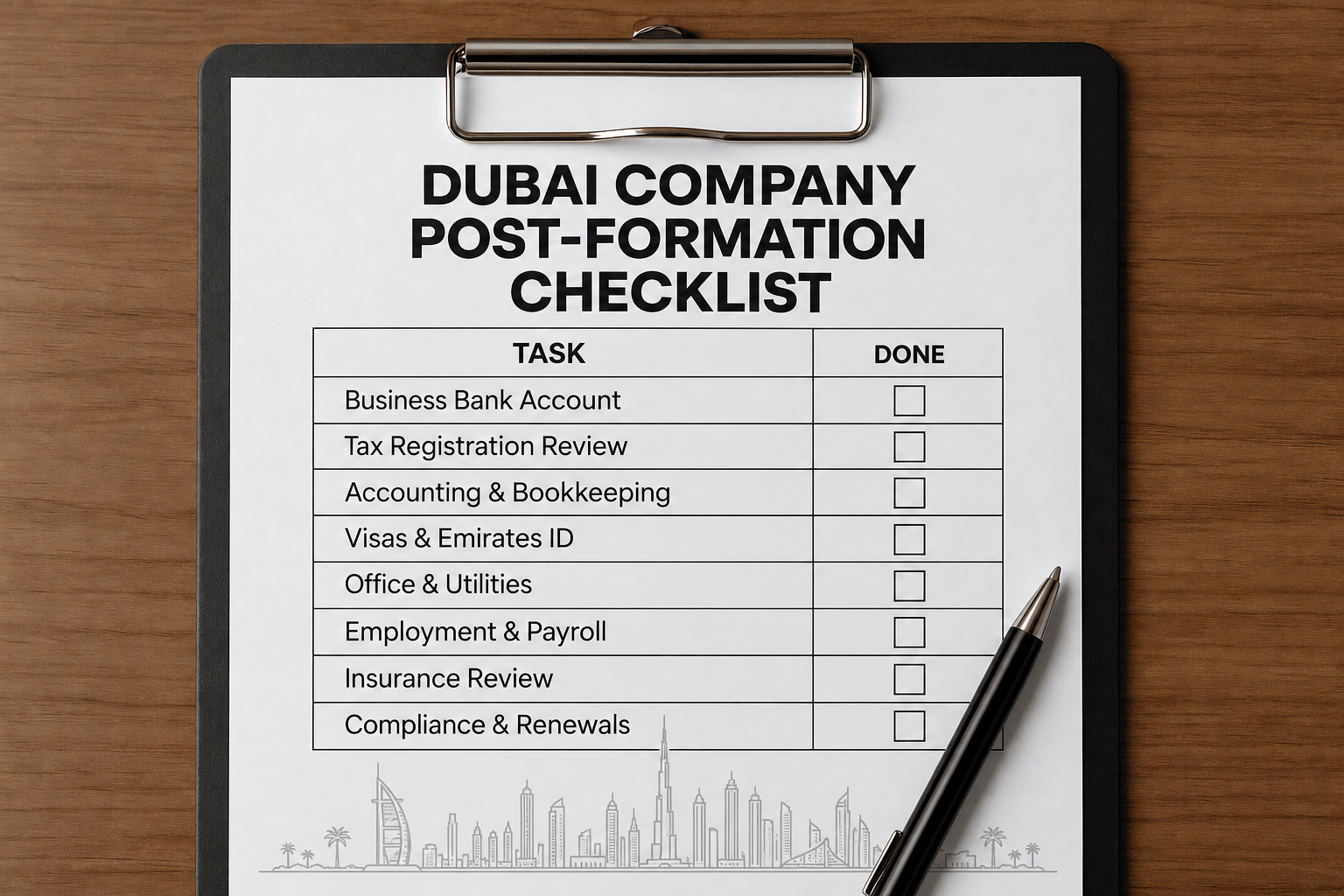
Receiving your Dubai trade licence is an important milestone, but it does not automatically complete every obligation your business may have. The next steps depend on your company's legal structure, business activity, licensing authority and planned operations.
Use this checklist to organise your business after company formation in Dubai.
1. Review your company documents
Keep your trade licence, incorporation certificate, Memorandum of Association where applicable, shareholder details and registered address records organised. Check that your licensed activities match the services you intend to provide. Some activities require additional approvals before operations begin.
2. Check Corporate Tax and VAT requirements
Determine whether your company must register for UAE Corporate Tax and identify its applicable registration deadline. Registration and filing obligations depend on the relevant tax rules and your company's circumstances.
VAT registration is a separate requirement. UAE-resident businesses generally become mandatorily eligible for registration when taxable supplies and imports exceed AED 375,000 over the previous 12 months, or are expected to exceed that threshold in the next 30 days. Other rules can apply to non-resident businesses.
Use the Federal Tax Authority to check the requirements relevant to your business.
3. Arrange a corporate bank account
Prepare your company documents, shareholder identification and information about your business activities, expected transactions and source of funds. Banks conduct their own due diligence, so company formation does not guarantee account approval.
4. Establish accounting procedures
Set up a process for recording invoices, expenses, receipts, supplier payments and bank transactions. Organise supporting documents and review cash flow regularly. Maintaining appropriate records supports financial management and tax compliance.
5. Review visas and employee requirements
If you plan to hire staff or apply for residence visas, confirm the applicable immigration, employment and licensing procedures. Requirements can vary by emirate, free zone and employee category. Do not assume that a trade licence alone authorises every employment or immigration activity.
6. Check beneficial ownership and licence obligations
Review whether your company must maintain or submit beneficial ownership information and complete any applicable declarations. Record renewal dates for your trade licence, establishment records and other permissions relevant to your operations.
7. Set up your business infrastructure
Arrange a professional business email, website, document storage and appropriate access controls. Confirm ownership of your domain and business accounts, and establish a process for protecting customer and company information.
How Bexford can help
Managing post-formation requirements across different providers and authorities can become complicated. Bexford supports entrepreneurs with UAE business setup, accounting, corporate tax and VAT support, bank account coordination, visa-related services and website development, depending on their needs.
Have you completed the steps after company formation? Contact Bexford to organise the next stage of your UAE business operations.
Official sources